Drawing can feel overwhelming for beginners—too many rules, too many techniques, where do you even start? You might worry you’ll mess up, or wonder how professionals make it look easy.
The 5 P's of drawing—Practice, Patience, Planning, Proportion, and Perspective—are core principles that help artists create better drawings. Mastering these P's improves skills, confidence, and results, whether you’re a beginner or a pro.
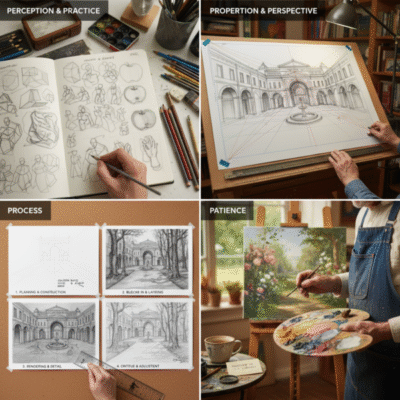 The 5 P's of Drawing
Lots of parents and teachers ask me, “What’s the best way to help kids (or myself) learn drawing fast?” When they hear about the 5 P's, a lightbulb goes on. These ideas don’t just improve art—they make practicing fun and stress-free. Let’s look at each one to see how they work.
What Does "Practice" Mean in Drawing?
It's easy to feel frustrated when your drawing doesn’t match what’s in your mind. You want results—now! But success starts with forming a habit and drawing regularly.
Practice in drawing means making time for sketching every day. Repetition builds muscle memory, trains your eye to see shapes better, and gradually improves your technique—even if you only draw for a few minutes.
 Practice Drawing Daily
Building Skills Step by Step
I remember as a kid, my earliest sketches looked nothing like what I saw in books. But every day at the kitchen table, I’d fill a page before homework. After a few weeks, I could draw a decent cat—by the end of the year, I was drawing all kinds of animals. It’s the same for any skill: athletes, musicians, and scientists all practice constantly because repetition works.
| Tip for Practice |
Why it matters |
Example |
| Draw every day |
Builds muscle memory |
10-minute sketch challenge |
| Use real objects |
Trains your eyes |
Draw fruit from your kitchen |
| Try new tools |
Broadens experience |
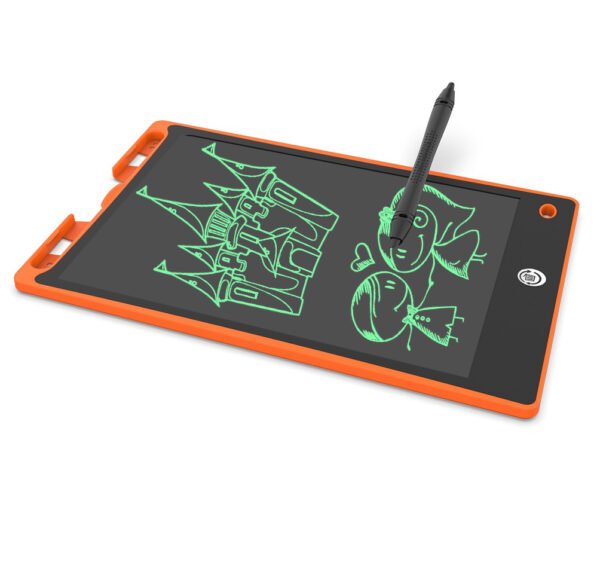
Pencil, marker, LCD writing tablet |
| Review your progress |
Tracks improvement |
Compare last month’s drawings |
Why Is "Patience" Essential for Drawing?
Everyone wants quick progress. But good art rarely happens in a rush. Impatience leads to frustration and, too often, giving up.
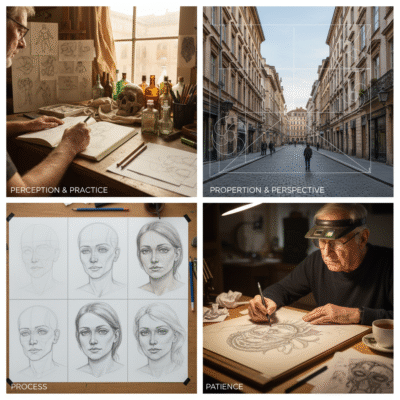
Patience in drawing is about giving yourself time to learn and improve. Big skills take many small steps—even artists you admire spent years making mistakes and learning from them.
 Patience in Drawing
Growing at Your Own Pace
Years ago, I attempted complex cityscapes when I hadn’t mastered basics. The results? Messy lines and disappointment. I learned that real growth happens when you slow down, accept mistakes, and celebrate each step. For kids (and adults), celebrating small wins keeps motivation high. As a teacher or parent, remind your child that every great artist was once a beginner.
Table: Patience in the Learning Process
| Phase |
What to Expect |
How to Stay Patient |
| Starting Out |
Wobbly, messy shapes |
Smile at your first tries |
| Practicing |
Slow but steady improvement |
Set goals, track growth |
| Mastery (years later) |
Confident and unique style |
Keep challenging yourself |
How Does "Planning" Improve Drawings?
Jumping in without a plan can lead to awkward layouts and wasted effort. Even quick doodles improve with a bit of thinking ahead.
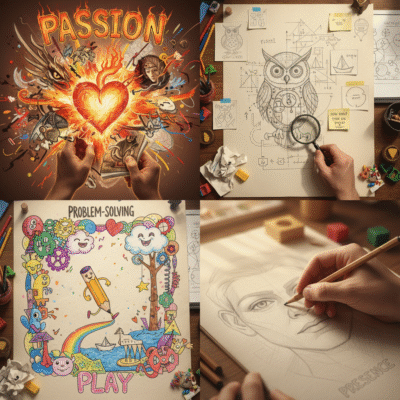
Planning means deciding what and how you’ll draw before you start. It includes simple steps like making light pencil marks for composition, choosing the subject, and imagining the scene in your mind.
 Planning a Drawing
Creating a Blueprint for Success
When I prepare a blog illustration, I always begin with light lines marking where parts should go. Even if it looks messy, this helps me spot mistakes before they’re permanent. For larger projects, I’ll make a small rough draft first. Planning saves time and helps bring ideas to life exactly as you imagine them.
| Planning Step |
Why it helps |
Simple Example |
| Light guidelines |
Avoids awkward placement |
Mark figure height on paper |
| Thumbnail sketches |
Tests ideas quickly |
5 tiny sketches, then choose one |
| Reference images |
Adds realism |
Use a photo of your pet |
| Layout grid |
Keeps proportions accurate |
Divide page into equal squares |
Why Are "Proportion" and "Perspective" Important?
Making something look “right” on paper depends on two keys: getting the size relationships and the illusion of depth correct. Drawings fall flat without these skills.
Proportion is about keeping body parts or objects the right size relative to each other. Perspective adds depth—making things look closer or further away, using angles and vanishing points. Both create realistic, believable drawings.
 Proportion and Perspective in Drawing
Mastering the Illusion of Space
When I first drew people, I made heads much too big and hands too small. Friends looked like cartoons! Only after learning simple measuring tricks—like “how many heads tall is this person?”—did my drawings look natural. Perspective came next: I learned to show roads shrinking into the distance with lines that meet at a vanishing point.
| Concept |
Why it's important |
Basic Technique |
| Proportion |
Realistic relationships |
Compare size: "Is the hand half as big as the face?" |
| Perspective |
Depth & realism |
Draw lines toward a vanishing point; objects get smaller as they go back |
Conclusion
The 5 P’s—Practice, Patience, Planning, Proportion, Perspective—are simple but powerful habits. They help everyone draw with more skill and confidence, one step at a time.